Why Most Loyalty Programmes Quietly Fail Independent Retailers, and What Magic Stamp Technology Does About It
The Silent Problem Behind Loyalty Churn
Here's a scenario worth sitting with for a moment. A customer walks into your shop every week. Same day, usually. Same order, often. For eight solid months, they're part of the rhythm of your business. Then they stop coming. No warning, no complaint, nothing. And you have absolutely no idea they've gone, because there was never a system that knew they existed in the first place. This isn't unusual. For the majority of independent retailers still relying on paper stamp cards or off-the-shelf QR codes, this is just how things work. Customers arrive, customers leave, and the business has no real visibility over either.
Why Magic Stamp Technology Was Built
Magic Stamp technology was built to change that. Not with a complicated overhaul of how you run your shop, but with something that makes an uncomfortable truth impossible to ignore: you cannot retain customers you cannot identify.
The Problem With Every Loyalty Solution You've Tried
Let's be honest about why most loyalty programmes underperform for independent retailers. It usually isn't the concept that fails. People genuinely like being rewarded for coming back. The failure tends to be operational, and it tends to be invisible until the damage is already done.
Paper Cards: Familiar, But Anonymous
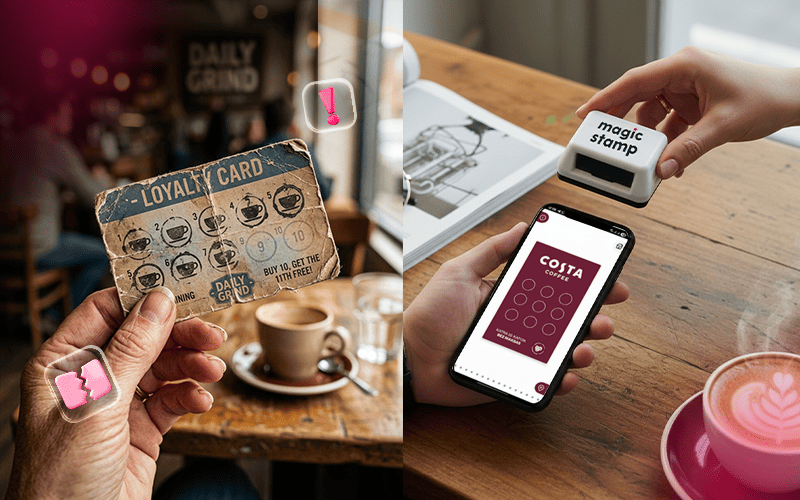
Paper stamp cards have a certain charm. They're tactile, they require no app download, and customers understand them immediately. The problem isn't the experience of using them. It's everything that happens, or doesn't happen, around them. Every stamp on a paper card is anonymous. You know a card was stamped; you don't know whose card it was, how often that person visits, or whether they've quietly switched to a competitor two doors down. There's no way to reach a lapsed customer because there's no record that they were ever yours to begin with. The data simply doesn't exist. Cards also get lost, forgotten in coat pockets, and left at home on the one day a customer is finally close to a reward.
QR Codes, Apps, and POS Friction
Digital alternatives look good in a pitch deck. In practice, they come with their own set of problems. QR codes are surprisingly fragile in a real retail environment. Busy counters, poor lighting, slightly cracked phone screens, a member of staff who's in the middle of something else: any of these can break the interaction. A customer who fails to scan twice will usually stop trying. Standalone brand apps face a different issue entirely. People are not going to download a separate app for every independent retailer they visit. Collecting phone numbers at the point of sale is sometimes suggested as a workaround. It isn't.
What Magic Stamp Actually Preserves
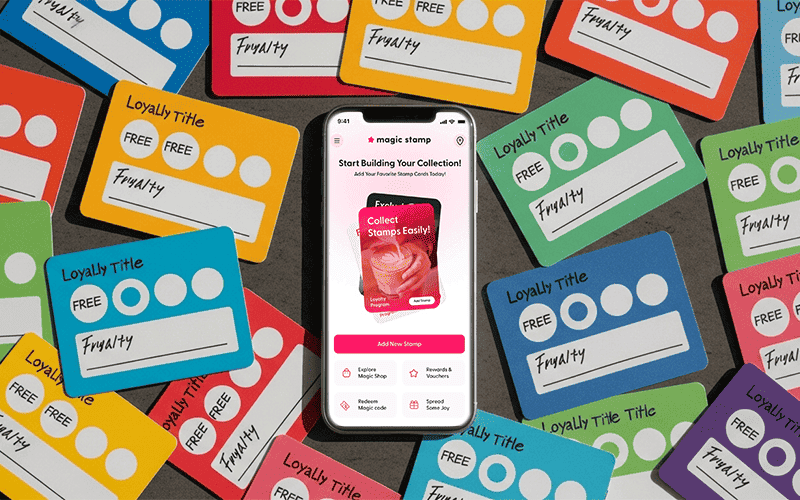
Magic Stamp doesn't try to replace the habit of stamping. It improves it. That distinction matters more than it might initially seem. The physical stamp card worked, psychologically speaking, because it gave customers something tangible: a visual record of progress, a sense of reward that built incrementally with each visit. Magic Stamp keeps the stamp. Customers still collect them, still watch their card fill up, still get that small hit of satisfaction when they're close to a reward. The experience is preserved. What changes is everything underneath it: the visibility, the data, the ability to act.
A Customer Profile Behind Every Stamp
When a customer stamps their digital card through Magic Stamp technology, the interaction is no longer anonymous. It's attributed to a real person, with a visit history, a pattern of behaviour, and a relationship to your business that you can actually see and respond to. That changes the nature of customer retention completely. Instead of running promotions and hoping the right people see them, operators can look at their data and ask specific questions: who visited three or more times last month, which customers haven't been in for over 30 days, which reward tiers are actually driving redemptions, and what visit frequency looks like across different days or locations.
The Features That Matter in Practice
Magic Stamp gives retailers tools that matter operationally. When someone stops visiting, the system can flag it. Operators can set their own thresholds, but the default is 30 days: anyone who hasn't stamped in a month gets marked as lapsed, and a targeted re-engagement campaign can go out to that segment specifically. Multi-location retailers can manage loyalty centrally so stamps and rewards follow customers across sites. And online orders can stay in the programme through unique codes that are redeemed digitally and update the loyalty record just like a physical visit.
Five-Star Nails: A Real Result
Five-Star Nails is a beauty salon with a premium clientele and standards to match. Their previous loyalty setup was a paper stamp card system. It worked, in the narrow sense that customers used it. But it gave the business nothing back. No data, no visibility, no way to know who their most loyal clients were or to reach out when someone stopped coming. They switched to Magic Stamp technology with a specific goal: make the loyalty experience feel as considered as everything else in the salon, and actually get some insight into how customers were behaving. Within two months, 870 customers had downloaded and activated their digital loyalty card, collecting over 3,000 stamps between them. More importantly, the business now had a named, reachable customer base for the first time.
Why This Matters Beyond Loyalty
There's a broader argument worth making here, especially for retailers who are also spending on paid acquisition. Customer acquisition through advertising is expensive, and it's getting more expensive. If you're running Meta campaigns, Google ads, or any kind of paid local marketing, you're paying to bring people through the door. But if those people visit once or twice and then disappear without any mechanism to keep them engaged, you're essentially paying for the same customer multiple times. Retention is cheaper than acquisition. Always. Magic Stamp technology makes retention something you can actually manage, rather than hoping it happens.
Frequently Asked Questions
Is Magic Stamp technology only for larger retail businesses? No. The platform works from a single site upwards. How do online or delivery customers collect stamps? Magic Stamp technology generates unique codes that operators can share digitally at checkout or include on packaging. How quickly can a business get up and running? Most operators are live within the same week. What data does the dashboard actually show? Visit frequency, stamp activity, redemption rates, and customer segmentation by engagement level. Can it connect with our existing till system or website? Integration options depend on what you're currently running.
The Question Worth Asking
If one of your best customers stopped coming in tomorrow, would you know? Not eventually. Not when someone mentions it in passing. Would you know within a week, with enough information to actually do something about it? For most independent retailers, the honest answer is no. Magic Stamp technology is built to change that.